

Governance Risk Compliance Help Prevent Financial Fraud
Amid growing regulatory complexity, higher business risk and a greater emphasis on accountability, companies have been pursuing broad governance, risk and compliance (GRC) initiatives. However, too often these projects are planned and managed in silos, creating overlap and duplication of efforts that increase costs and decrease visibility. Streamlining these initiatives through unified control, definition and monitoring can help prevent financial fraud.
Increasingly, businesses face the need for strong compliance programs that are not only mandatory, but are integrated into corporate culture. This is particularly important given that the annual cost to the global economy from cybercrime has been estimated at $6 trillion or more. These threats include viruses, ransomware, phishing and other digital hazards that are designed to infiltrate data and tamper with systems to conceal and hide illicit activity.
The good news is that strong corporate grc governance risk compliance practices are a critical component to preventing fraud and other types of financial crimes. These best-practice structures define roles and create vigilant oversight to identify potential problems before they can become costly or damaging. They also enforce adherence to legal standards and foster ethical practices throughout the company.
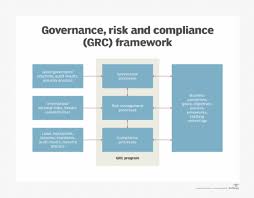
How Can Governance Risk Compliance Help Prevent Financial Fraud?
A best-practice approach to achieving these goals is through an integrated GRC solution that allows organizations to manage, monitor and report on all risk factors, including those related to governance, from a single interface. This is different from a modular or specialized framework that treats these components as separate entities, which can lead to redundancy of effort and the inability to measure performance.
An integrated grc governance risk compliance solution allows an organization to map each of its internal controls against its mapped governance factors, and the system then reports on any breaks in these areas as they are detected. This is more accurate than a domain-specific approach that may detect multiple findings related to the same governance factor, and can significantly reduce time spent on monitoring the system.
Another benefit of an integrated GRC model is the potential for significant cost savings. According to a recent survey conducted by Chartis, integration of several governance and risk functions into a single platform can cut operational costs by up to 30%. This is the result of rationalization and cost savings from shared resources, such as a centralized data platform that eliminates the need for multiple systems that would be required for each function to operate independently.
Integrating governance, risk management, and compliance into a unified framework offers several advantages to organizations. First, it ensures that these critical functions are aligned, allowing for more effective decision-making and reducing the likelihood of gaps or overlaps in the management of risks and compliance obligations.
In an age when cybercrime is more sophisticated than ever before, it’s imperative that banks and other financial institutions deploy technology and processes capable of detecting the signs of fraudulent activity. These tools need to be able to sort through large volumes of data and account behavior, separating normal from potentially problematic transactions. Integrated GRC solutions provide the most accurate and comprehensive view of risk and compliance, enabling these departments to focus on what matters most: protecting their customers and their reputations.


