
Tata Motors, India’s leading automaker, expects electric vehicles (EVs) to account for 25-30% of its total sales within the next two years, a significant jump from the current 10-12%, according to comments made by the company management in an analyst meeting.
In the last financial year, the company had sold around 50,000 electric vehicles, which constituted around 9.2% of its total vehicle sales of 5.41 lakh units.
In the current year, the expectation was that the company would double its sales to 100,000 EVs.
However, with data for March sales pending, the company’s total EV sales is on track likely to be between 75,000-80,000 for the current year. The company attributed the miss to a lack of expansion in its charging infrastructure.
Because of the miss, the share of EVs continues to remain in 10-12% range. But, said the analyst who met the company company management, it is confident of raising this to 25-30% soon.
“Over the next two years, it aims to increase the current EV mix from 12% to approximately 25-30% and to 50% by FY30,” said Himanshu Singh of Prabhudas Lilladher after interacting with Tata Motors management.
Tata Motors, despite entering the EV space after rival Mahindra & Mahindra, is the undisputed No.1 in India’s EV space. However, it is expected to face tougher competition from rivals, such as China’s MG, in the coming financial year.
The Indian company, which already has nearly half a dozen EV cars and SUVs on offer, has been focusing on expanding its EV portfolio to maintain its market leadership.
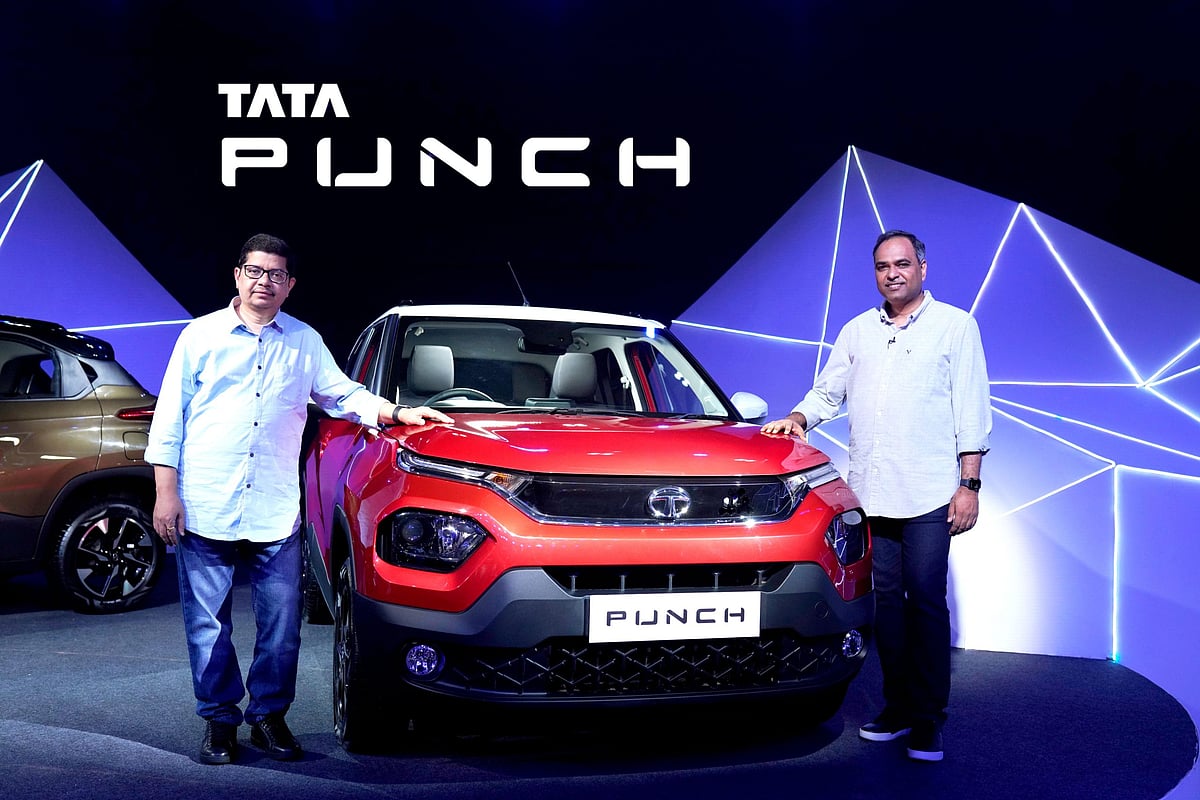
It recently launched its Punch.ev model, which has reportedly received a strong response from customers.
The management feels that this new vehicle could add an incremental volume of around 2,000-2,500 units per month to its current tally of 5,000-6,000.
Additionally, Tata Motors is in the process of launching the Tata Curv EV and Harrier EV, which will further increase its offerings on the EV platform and aid in volume growth.
The company has a long-term goal of deriving 50% of its sales from EVs by FY30.