

Circuit Boards Can Be Used in Aerospace Applications
Aerospace is a field that requires highly advanced electronic devices. The industry deals with jumbo jets, spacecrafts and even flying cars. These devices need to be able to tolerate extreme environments that would quickly render standard PCBs inoperative. Moreover, the aerospace industry has quality requirements beyond those of the typical office environment where standard PCBs typically operate. This makes it a challenge for manufacturers to produce and assemble boards that can meet these strict specifications, particularly when working with tight deadlines.
Fortunately, fast-turn circuit boards can help with these challenges. These quick-to-market boards allow engineers to test their designs and ensure that they can be manufactured at scale within a short timeframe. They also allow designers to make changes and reduce the risk of costly errors that can occur after production has begun.
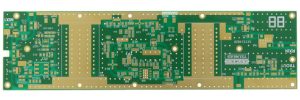
The first step in getting a quick turn circuit boards is to find a manufacturing partner with the right experience and capacity. This means choosing a manufacturer that has streamlined processes and the right equipment to handle various materials, layer counts and board sizes. It is also important to look for a manufacturer that has a proven track record of producing high-quality PCBs within a tight timeframe.
How Fast Turn Circuit Boards Can Be Used in Aerospace Applications
To ensure that your PCB will be able to function properly in aerospace applications, it is essential to use the correct components. These must be compatible with the temperature and humidity of the specific environment in which it will operate. It is also essential to route the traces correctly. This can be done by maintaining the shortest possible length of the traces or by using curved traces, which will minimize impedance problems. Additionally, you should use mil-spec components to guarantee that the electrical currents will be transmitted smoothly and efficiently.
In addition to utilizing the right materials, it is important to use proper fabrication techniques on your aerospace PCBs. This includes implementing stacked vias and laser drilling to ensure that your components are properly seated in the copper pads. This will prevent solder from leaking into the holes, and it will also protect against vibration problems caused by movement of the aircraft in flight. Additionally, it is a good idea to apply thermal compounds to the copper pads to help with heat dissipation.
Another way to optimize your PCB for use in aerospace applications is to use a flexible PCB. These boards are capable of operating in a wide range of temperatures and can be made from different types of materials. They are also resistant to chemicals and are able to withstand harsh environments. Additionally, these boards can be customized to accommodate your needs. For example, you can add additional circuitry or mounting options to meet your specific requirements. Lastly, you can also choose from a variety of coatings to increase the durability of your circuit board.


