
technology of printed circuit board assembly companies
Printed circuit board assembly (PCBA) companies play a crucial role in the electronics industry, providing the backbone for countless devices and systems. As technology continues to evolve at a rapid pace, so too does the field of PCB assembly, with ongoing advancements driving innovation, efficiency, and performance. Several key areas are witnessing notable progress in the technology of PCB assembly companies.
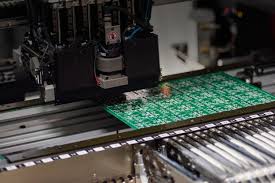
One significant advancement is the adoption of surface mount technology (SMT), which has revolutionized the printed circuit board assembly companies process. SMT allows for smaller components to be mounted directly onto the surface of the PCB, enabling higher component density, reduced size, and enhanced performance. This shift away from through-hole components has led to improvements in miniaturization, increased circuit complexity, and higher assembly speeds, thereby paving the way for more compact and feature-rich electronic devices.
Furthermore, advancements in automation and robotics have transformed the manufacturing landscape of PCB assembly companies. Automated assembly lines equipped with robotic pick-and-place machines, soldering robots, and automated optical inspection (AOI) systems have streamlined production processes, increased throughput, and improved quality control. These advancements have not only reduced labor costs and minimized human error but also enabled PCB assembly companies to handle larger volumes and meet tighter deadlines with greater efficiency.
What advancements are being made in the technology of printed circuit board assembly companies?
Another area of advancement in PCB assembly technology is the development of advanced materials and substrates. High-performance materials such as high-speed laminates, flexible substrates, and metal-core PCBs offer improved thermal management, signal integrity, and reliability, making them ideal for demanding applications in industries such as telecommunications, automotive, and aerospace. Moreover, the emergence of additive manufacturing techniques such as 3D printing has opened up new possibilities for prototyping, customization, and rapid iteration in PCB assembly.
In addition to materials and processes, advancements in inspection and testing technologies are enhancing the quality and reliability of PCB assemblies. Automated optical inspection (AOI), X-ray inspection, and functional testing equipment enable PCB assembly companies to detect defects, ensure compliance with specifications, and validate the functionality of assembled PCBs with greater accuracy and efficiency. Real-time data analytics and machine learning algorithms further enhance inspection capabilities by enabling predictive maintenance, fault detection, and process optimization.
Furthermore, the integration of Internet of Things (IoT) technology is driving connectivity and intelligence in PCB assemblies. Smart sensors, embedded systems, and wireless communication modules enable PCB assemblies to collect data, communicate with other devices, and adapt to changing environments in real-time. This connectivity not only enhances the functionality and versatility of electronic devices but also opens up opportunities for remote monitoring, predictive maintenance, and data-driven insights.
Moreover, environmental sustainability is becoming an increasingly important consideration in the technology of PCB assembly companies. Efforts to reduce waste, minimize energy consumption, and optimize resource utilization are driving the adoption of eco-friendly materials, energy-efficient processes, and waste reduction initiatives. From lead-free soldering techniques to closed-loop recycling programs, PCB assembly companies are embracing sustainable practices to minimize their environmental footprint and contribute to a greener future.
In conclusion, the technology of printed circuit board assembly companies is undergoing continuous advancements across various fronts, including materials, processes, automation, inspection, connectivity, and sustainability. These advancements are reshaping the electronics industry, enabling smaller, faster, and more reliable electronic devices with enhanced functionality and performance. By staying abreast of emerging technologies, embracing innovation, and prioritizing quality and sustainability, PCB assembly companies are poised to drive further progress and meet the evolving needs of the market.